
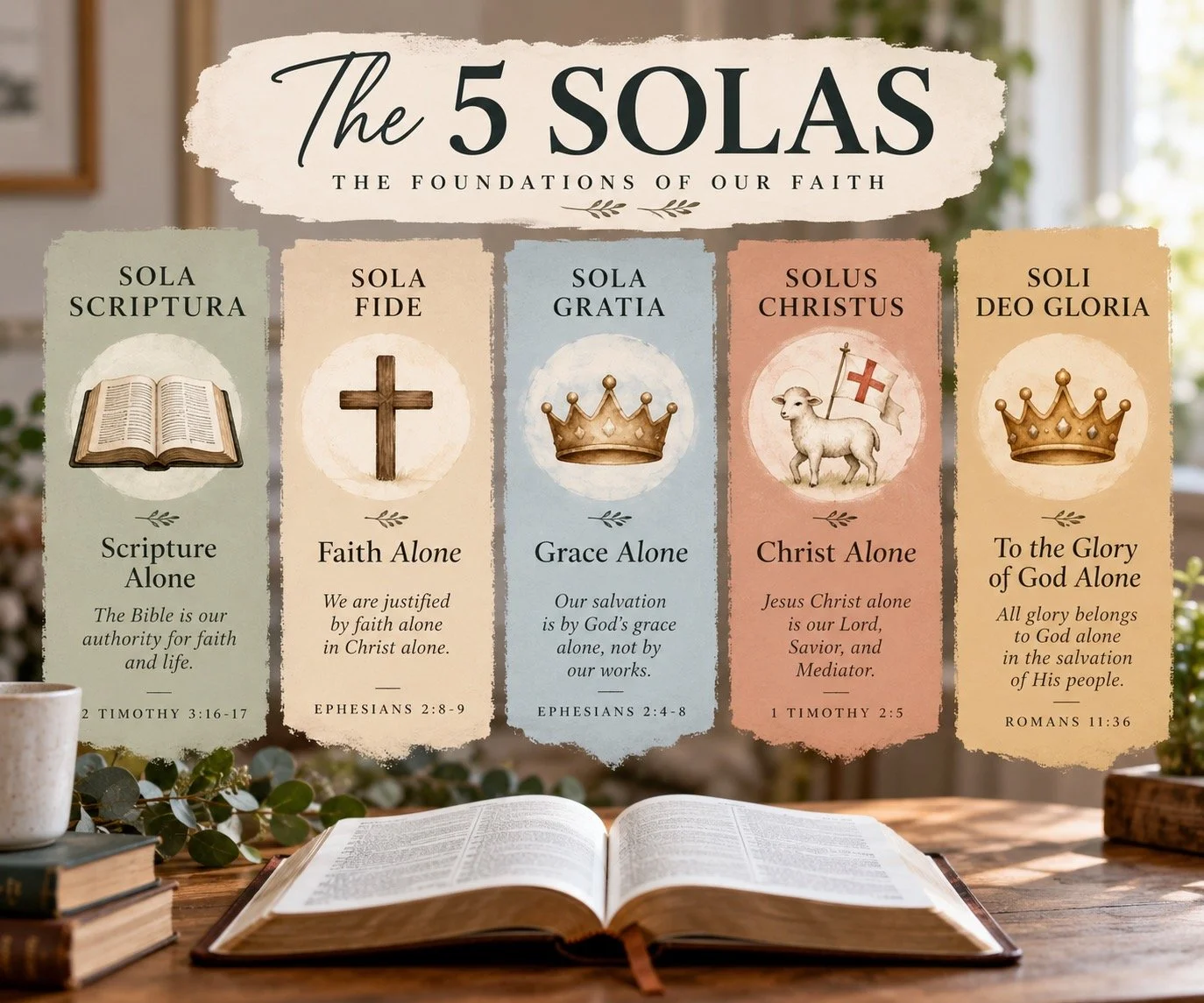
Five Solas-Intro
The weeks leading up to October 31 evoke within our American experience all manner of feelings, imagery, and traditions. For most, autumn is in the air as preparations are made for Halloween and celebrations of the harvest. In one way or another, these traditions leave their mark on our homes, neighborhoods, and storefronts as decorations change to match the season. While these things may mark the broader cultural landscape, there is another "harvest" whose memory also attends this season, one that often gets overlooked, even among many churches that are beneficiaries of its blessings.

The Service of Assembly
“People who serve are people who stay.” This is a popular saying that, for a few decades now, has gained popularity as a truism within American church growth movements and around the staff meeting tables of myriad local churches. The idea behind this maxim comes from a line of thinking that prioritizes church growth via programmatic pathways focusing on guest assimilation and member retention, or as another saying puts it, a need to “close the back door.” These pathways or “assimilation systems” aim to maximize guest experience in hopes that they become regular attenders, regular attenders become meaningfully connected or members (if the church has formal membership), and members find ministries or programs in which they are committed to serve. Because of course, “people who serve are people who stay.”

God Dwells Among His Gathered People
As those who live in a society increasingly formed around secularism, it’s easy to lose sight of the spiritual realities that influence the world we inhabit. As we watch the nations rage, the polarization of our society, and face our own difficult circumstances and trials of many kinds, even as Christians, we often only see these through the lenses of the material or coincidence. However, the churches in and around Ephesus lived under no such illusions.

God the Righteous and Just
I was listening recently to an interview with well-known cultural and political commentator Dennis Prager, who also happens to be a follower of Orthodox Judaism. Because of a shared Judeo-Christian moral framework, his professional life often finds him rubbing shoulders, platformed, and allied with conservative Bible-believing Christians against our culture’s descent into leftist secularism.

Attributes of God: Immensity and Omnipresence
It is difficult to imagine an aspect of God’s being more gloriously unfathomable and at once more comforting and awful than the realities of God’s Immensity and Omnipresence. How can we truly get our minds around the idea that God is “without measure” (his immensity) or that he is fully everywhere, all at once, all the time (his omnipresence)?